
“`html
The Death of the Business Card Era
For decades, the word “networking” has been a cornerstone of professional development. We were told to “work the room,” collect business cards like Pokémon cards, and “optimize” our LinkedIn profiles to ensure maximum visibility. But if you look at the current landscape of professional interaction, something feels fundamentally broken. The sterile, transactional nature of traditional networking has reached its expiration date.
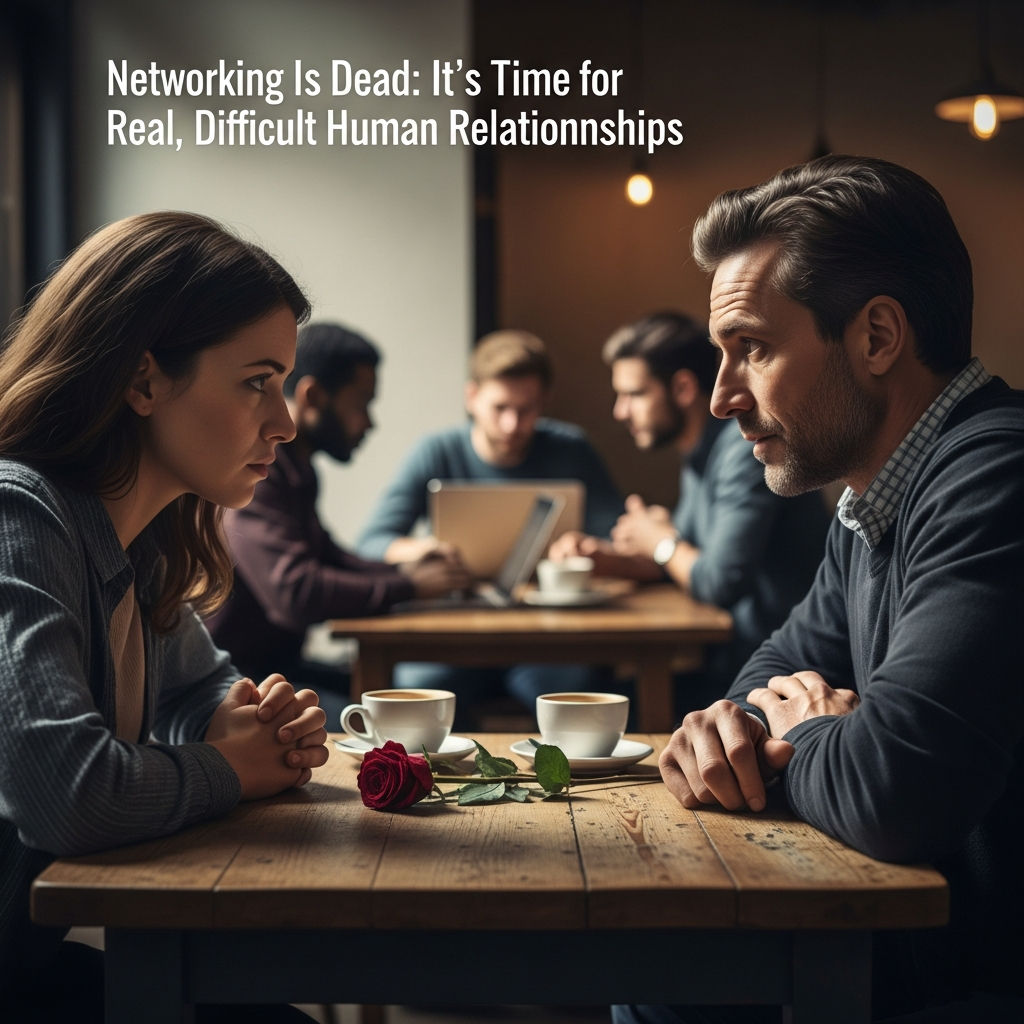
We are currently living through a crisis of connection. Despite being more “connected” than ever through digital platforms, professionals report higher levels of loneliness and career dissatisfaction. The reason is simple: networking was designed for efficiency, not intimacy. It was built for a world of stable hierarchies, not the volatile, complex, and deeply human landscape we navigate today. It is time to declare that networking is dead and embrace something much more demanding: real, difficult human relationships.
The Problem with Transactional Networking
Traditional networking is built on a “quid pro quo” foundation. You attend an event with the unspoken question: “What can this person do for me?” This mindset creates a thin, brittle web of acquaintances that shatters under the slightest pressure. Here is why the old model failed:
- Performative Professionalism: Networking encourages us to present a curated, “perfect” version of ourselves, hiding our flaws and struggles.
- Digital Fatigue: Automated LinkedIn outreach and “coffee chat” spam have turned human interaction into a numbers game.
- Lack of Resilience: Transactional ties disappear the moment you lose your job or your “value” in the marketplace diminishes.
- The “Pitch” Mentality: When every conversation is a pitch, no one is actually listening.
Why We Fear “Difficult” Relationships
The pivot toward “difficult” relationships sounds counterintuitive. Why would we want something difficult? In a world of one-click solutions, we have been conditioned to avoid friction. However, friction is exactly what creates heat, growth, and bonding. A “difficult” relationship isn’t one that is toxic; it is one that requires vulnerability, accountability, and emotional labor.
Real relationships are “difficult” because they require us to show up when things aren’t going well. They require us to have hard conversations, to admit when we are overwhelmed, and to invest time in others without a guaranteed Return on Investment (ROI). Networking is a transaction; a relationship is an investment.
The Myth of the “Clean” Connection
Modern networking tries to keep things “clean”—no politics, no personal baggage, no mess. But humans are messy. By stripping away the mess, we strip away the humanity. When we allow our professional relationships to become a bit “difficult”—by sharing our failures or asking for genuine help—we move from being “contacts” to being “comrades.”
The Three Pillars of Real Human Relationships
If we are to move past the corpse of networking, we must build our professional circles on a new set of values. These three pillars transform a superficial network into a powerful support system.
1. Radical Vulnerability
In the old world, showing weakness was a career killer. In the new world, vulnerability is the ultimate bridge. When you tell a peer, “I’m actually struggling with this project and I’m not sure I’m the right person for it,” you aren’t just sharing information; you are extending an invitation for trust. This honesty bypasses years of small talk and creates an immediate, authentic bond.
2. Shared Struggle (The “In the Trenches” Effect)
The strongest professional ties aren’t formed at cocktail parties; they are formed in the “trenches” of a difficult project, a failing startup, or a shared industry crisis. Real relationships are forged through shared struggle. Instead of looking for people who can help you “get ahead,” look for people you can solve hard problems with. The bond of working through a crisis together is worth more than a thousand LinkedIn endorsements.

3. Long-Term Accountability
Networking is often short-sighted. You meet, you exchange value, you move on. Real relationships involve staying in the room when the lights go out. This means holding each other accountable to your goals, checking in when someone goes quiet, and offering support during the “dry seasons” of a career. It is the difference between a “follower” and a “friend.”
From Social Capital to Social Cohesion
Economists often talk about “social capital”—the resources available to you through your network. But social capital is cold. We should instead strive for social cohesion. Cohesion is the glue that keeps a group together during a storm. In an era of AI-driven automation and economic shifts, your “network” won’t save you, but your community will.
When you have real, difficult relationships, you don’t need to “market” yourself to your peers. They already know your character, your capabilities, and your heart. This provides a level of psychological safety that allows you to take bigger risks, innovate more freely, and recover faster from setbacks.
How to Build Real Relationships in a Digital World
Shifting your mindset from networking to relationship-building requires a tactical change in how you interact with the world. Here are a few ways to start building deeper ties today:
- Stop “Connecting” and Start “Communing”: Instead of a 15-minute Zoom call to “pick someone’s brain,” invite them to a long walk or a meal where business is not the primary agenda.
- Ask the “Second Question”: When someone says they are “fine,” don’t move on. Ask a second, deeper question about what’s actually taking up their mental space.
- Be the First to Help: Offer help to someone in your circle without them asking for it, and without expecting a favor in return.
- Curate a Small Circle: Focus on 5–10 deep relationships rather than 500 superficial ones. Remember Dunbar’s Number; we only have the cognitive capacity for a limited number of stable social relationships.
- Embrace the Friction: If a disagreement arises with a colleague, don’t ghost them. Work through it. The process of resolving conflict often creates a much stronger bond than never having a conflict at all.
The Competitive Advantage of Being Human
As Artificial Intelligence becomes more adept at managing “networking” tasks—writing emails, optimizing profiles, and matching candidates to jobs—the value of human-centric skills will skyrocket. Machines cannot be vulnerable. Machines cannot share in the emotional weight of a failure. Machines cannot offer the “difficult” kind of loyalty that humans can.
The future of work isn’t about who you know; it’s about who knows you—the real you, not the polished LinkedIn avatar. By leaning into the difficulty of real human relationships, you aren’t just building a career; you are building a life integrated with others who care about your success as much as their own.
Conclusion: The Invitation
Networking is dead because it was an attempt to turn humans into assets. It failed because humans are not assets; we are social creatures who thrive on depth, meaning, and mutual support. It is time to stop “working the room” and start building the foundations of a community.
The next time you’re tempted to send a cold, professional “outreach” message, stop. Instead, reach out to someone you already know and ask them a difficult question. Share a struggle. Offer a hand. Move past the surface. It will be harder, it will be messier, and it will take longer—but it will be real. And in today’s world, “real” is the only thing that lasts.
“`